How to Create SEO Content AI That Actually Ranks
Why Most AI Content Fails and What to Do About It
I have been building affiliate sites since 2016, and I have watched the tools change every year. When OpenAI released GPT-3, everyone thought they could just generate articles and watch the traffic roll in. That did not happen. Google got smarter, and so did the people who read the content. The phrase "create seo content ai" gets thrown around a lot, but doing it well is harder than it sounds. I have tested dozens of workflows, burned through a few thousand dollars in subscription fees, and finally found a system that works consistently.
This article shares what I learned the hard way. If you are building an affiliate site, especially one tied to programs like Amazon Associates, ShareASale, or ClickBank, the quality of your content determines whether you earn passive income or just pay hosting bills. The goal is not to produce as many words as possible. The goal is to produce content that answers a real search query better than the top ten results already do.
The Stack That Works
You do not need every tool on the market, but you do need a few that cover the essential stages: research, drafting, optimization, and editing. Here is what I currently use and why.
Research Phase
Before I write a single word, I open Semrush or AHFS to see what people are actually searching for. I look at the keyword difficulty, the search volume, and the kind of content that currently ranks. If the top results are thin listicles or outdated guides, I know I have a chance. I also use Google Search Console on my own sites to find queries where I already have some impressions but low clicks. Those are easy wins.
For content structure, I rely on Surfer SEO. It analyzes the top-ranking pages for a keyword and tells me what headings, word count, and related terms to include. Surfer is not perfect, it can push you toward generic outlines, but it gives a solid starting point. I also check the "People also ask" boxes on Google and the related searches at the bottom of the results page. Those are goldmines for subtopics.
Drafting Phase
This is where the phrase "create seo content ai" comes into practical use. I use ChatGPT or Jasper AI to generate the first draft. But I never take that draft as final. I feed the AI a detailed brief that includes the target keyword, the main entities I want to cover, the outline from Surfer, and a few sentences about the angle. For example, if I am writing a review of a WordPress plugin like RankMath, I tell the AI to focus on specific features, pricing, and a comparison with Yoast SEO. Without that brief, the output is too generic.

After the AI generates the draft, I go through it paragraph by paragraph. I remove fluff, add personal observations, and insert specific examples. I also check for factual accuracy. AI models hallucinate, and an affiliate site that publishes wrong information loses trust fast. I have caught cases where ChatGPT invented a feature that did not exist or misquoted a price. Always verify.
Optimization Phase
Once the draft is clean, I run it through Surfer SEO again to check keyword density, heading distribution, and readability. I also use ProWritingAid to catch grammar issues and awkward phrasing. For internal linking, I use Link Whisper to automatically suggest relevant connections between my old and new posts. Internal links are one of the easiest ways to boost SEO, and Link Whisper saves me hours of manual work.
I also set up Yoast SEO or RankMath on my WordPress site. Both plugins give a readability score and a traffic light for SEO. I do not obsess over getting a green light every time, some of my best-performing pages have an orange light because they are longer and more detailed than the plugin wants, but I use the feedback as a rough guide.
Editing Phase
Editing is where most people cut corners. They publish the AI draft with a few tweaks and move on. That is a mistake. I read the entire article out loud. I look for sentences that drag, transitions that feel forced, and places where I could add a real-world example. If I am recommending a product from Amazon Associates, I describe exactly how I used it and what I liked or disliked. That kind of detail cannot be faked.
I also check for consistency with my existing content. If I have a post that covers a related topic, I make sure the new article links to it and that the two pieces do not contradict each other. A PBN strategy can help with authority, but only if the content is coherent across the network.
Common Mistakes and How to Avoid Them
I have made every mistake in the book. Here are the ones that cost me the most time and money.
- Over-relying on a single tool. I used to generate everything with Jasper AI and publish without Surfer or ProWritingAid. The traffic was terrible. Now I use a mix of tools and always run a human edit.
- Ignoring search intent. A page that ranks for "best running shoes" but only talks about shoe history will never convert. You need to match the intent of the query. If people want a list, give them a list with clear recommendations.
- Neglecting internal links. Your site is a garden. If you never water the connections between pages, the whole thing dries out. Link Whisper helps, but you still need to think about which pages support each other.
- Writing for the AI, not the reader. I have seen content from Content at Scale and Neural Text that reads smoothly but says nothing. The AI can produce fluent sentences, but it cannot replace your judgment about what matters to the reader.
How to Scale Without Burning Out
Once you have a workflow that reliably produces good content, the next question is scale. How do you publish more articles without spending all your time editing? The answer is not to publish faster. It is to build systems that handle the repetitive parts so you can focus on the high-value work.
I use a combination of ChatGPT for initial drafts, Surfer SEO for optimization, and ProWritingAid for light editing. I also batch my work. I research ten topics in one sitting, then draft five articles, then optimize and publish them over a week. That rhythm keeps me from context-switching every twenty minutes.
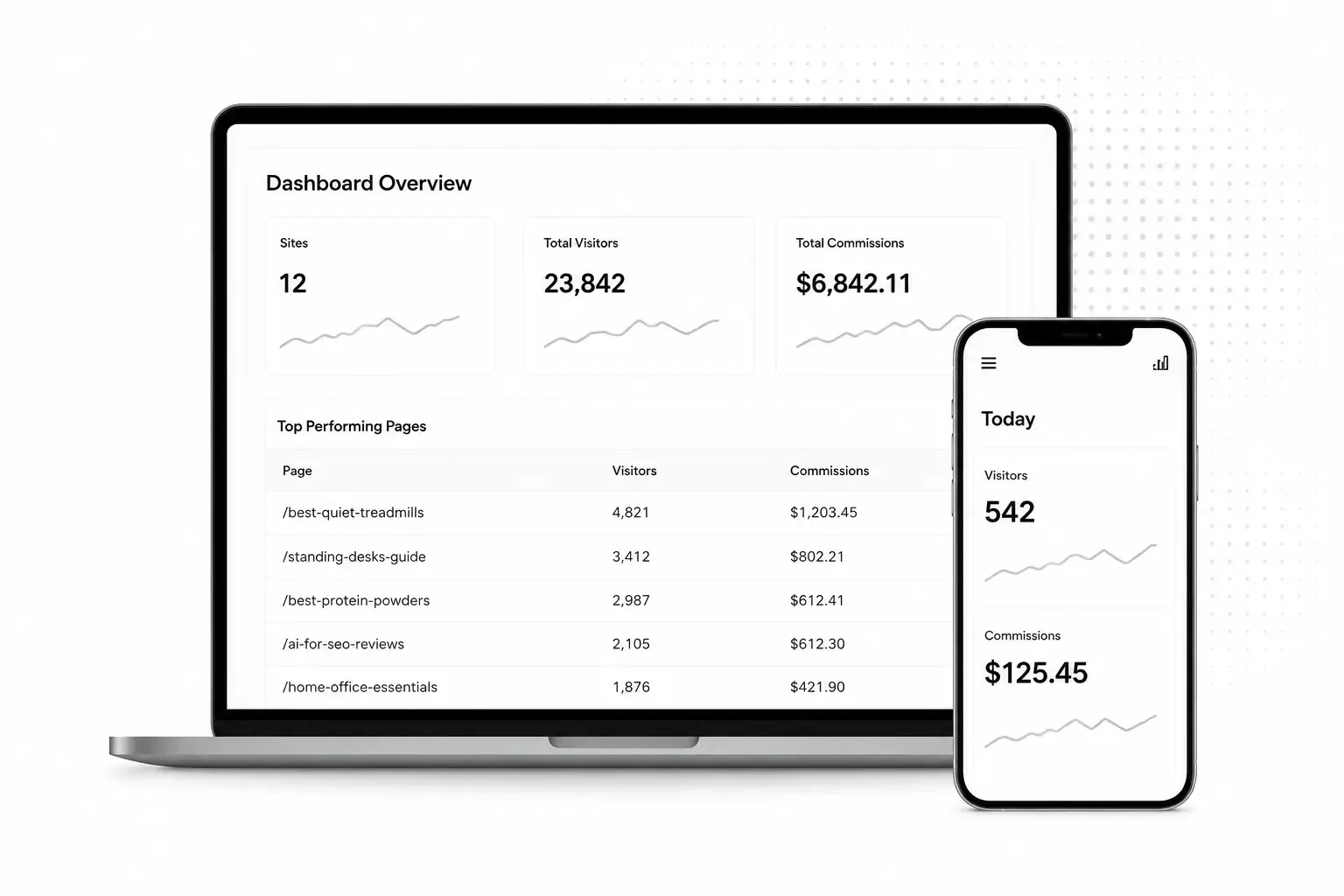
For affiliate sites, I also integrate with Amazon Associates and ClickBank directly. I have a spreadsheet that tracks which products earn the most, and I prioritize content around those products. Tools like Authority Hacker and WebWiki have published case studies showing that targeted, well-researched content outperforms broad, generic content every time.
Measuring Success
I check Google Search Console every week to see which queries are gaining impressions and which ones are losing. I also watch my average position and click-through rate. If a page is ranking on page two but not getting clicks, I rewrite the title tag and meta description. If a page is getting impressions but no clicks, I look at the snippet and see if I can improve it.
I also monitor my backlink profile. A single link from a reputable site can lift an entire section of your site. I do not build links artificially, but I do reach out to other site owners when I have a piece of content that genuinely helps their audience. That is a slow process, but it works.
Finally, I revisit old content every six months. I use Surfer SEO to compare my page against the current top results. If my page has fallen behind, I update it with new information, better examples, and more current links. This kind of refresh often gives a bigger traffic boost than publishing something new.

Final Thoughts
Learning to create SEO content AI that actually ranks is a process, not a one-time fix. The tools change, the algorithms change, and the audience changes. What stays the same is the need for useful, honest, and well-structured content. If you keep that as your North Star, the traffic and income will follow.
Start with one niche. Pick a tool stack that fits your budget and skill level. Write ten articles, see what works, and then iterate. Over time, you will build a library of content that earns passive income without requiring you to be an influencer or a technical wizard. That is the whole point of this kind of site.